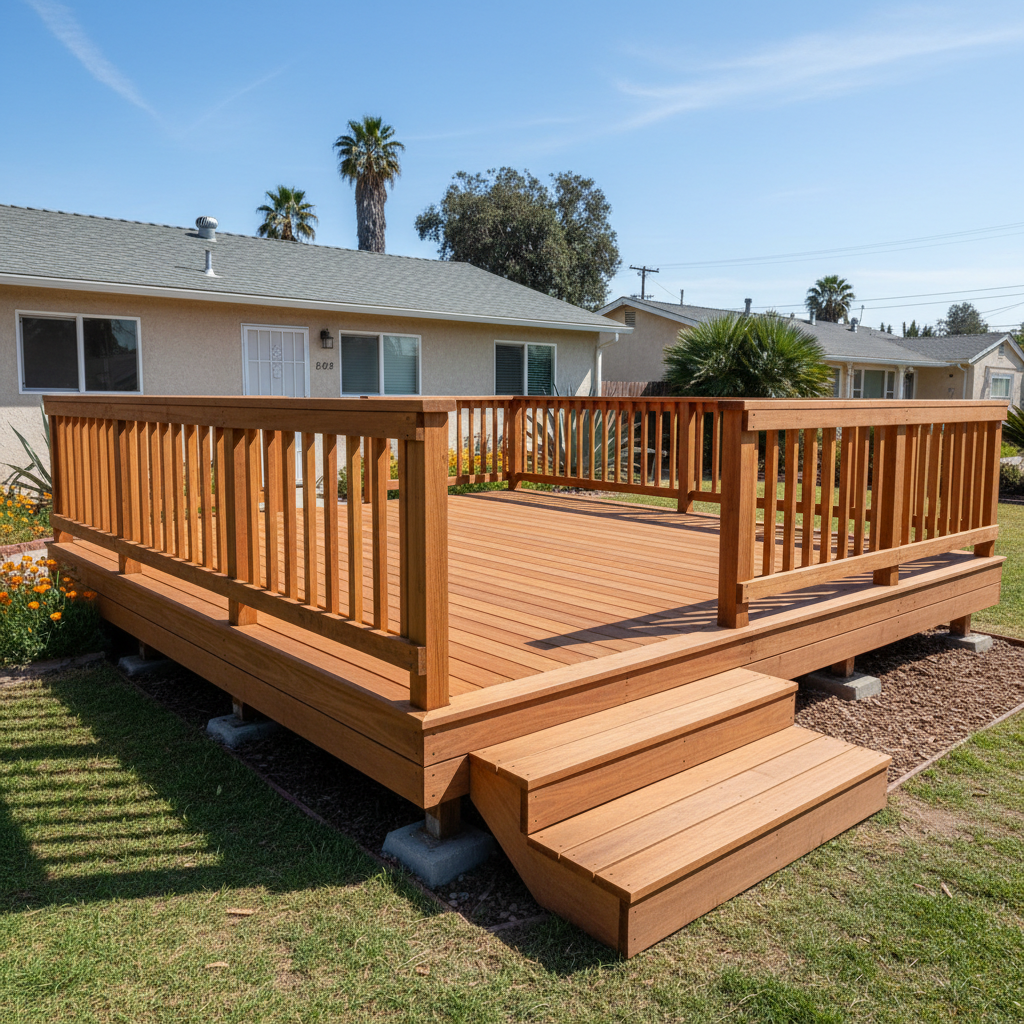
Alright, let's get right to it. You're looking to add a deck, and the first thing on your mind is probably, "How much is this gonna set me back?" It's a fair question, and frankly, a lot of folks in our area get sticker shock or, worse, get ripped off because they don't know what they're looking at. I've been building decks in Pomona for years, and believe me, I've seen it all. So, let's talk about what a new deck really costs around here.
What Makes Deck Prices Go Up (or Down)?
There isn't one simple answer, and honestly, anyone who gives you one without asking questions is probably blowing smoke. Here's what really affects the price tag:
- Size and Shape: This one's pretty obvious, right? A bigger deck means more materials and more labor. A simple square or rectangle is always cheaper than a multi-level, curved, or oddly shaped design. All that complexity adds time and specialized cuts, which, naturally, costs more.
- Material Choices: This is probably the biggest factor. Pressure-treated pine is your most budget-friendly option. Composites like Trex or AZEK cost more upfront but save you a ton on maintenance over the years. Then you've got hardwoods like Ipe, which are gorgeous and durable but come with a premium price tag.
- Foundation Type: Most decks around here use concrete footings, especially with our clay soil in areas like Phillips Ranch or North Pomona. The depth and number of these footings depend on your deck's size and height. Sometimes, if the ground's really uneven or you're going high, you might need more complex pier and beam systems, which adds cost.
- Height and Access: A ground-level deck is simpler and cheaper. But a deck off a second story, or one that needs extensive scaffolding or specialized equipment because of tough backyard access, will definitely cost more.
- Railings and Stairs: Basic wood railings are standard. Upgrading to composite, aluminum, glass, or cable railings can significantly increase the price. Stairs, especially those with landings or complex turns, also add to the overall cost because they're pretty labor-intensive.
- Permits and Design: Don't skip this part. In Pomona, any deck over a certain height or size needs a permit. Good contractors include this in their quote. The design phase itself, especially for custom layouts, can also be a factor.
Typical Cost Ranges for a New Deck in Pomona
Okay, let's get some numbers out there. These are averages I see for a standard, single-level deck, 200-300 square feet, built to code in Pomona. Remember, these are estimates, and your specific project will vary.
- Pressure-Treated Wood: You're usually looking at around $35 - $50 per square foot. So, for a 250 sq ft deck, that's roughly $8,750 to $12,500. This is a solid, economical choice, but you'll need to stain and seal it regularly.
- Composite Decking (Mid-Range): For a good quality composite like a mid-tier Trex product, expect to pay $55 - $75 per square foot. That same 250 sq ft deck would run you about $13,750 to $18,750. You're paying for durability and low maintenance here.
- Premium Composite or Hardwood: If you want top-of-the-line composite or a beautiful hardwood like Ipe, you're probably in the $80 - $120+ per square foot range. For our 250 sq ft example, that's $20,000 to $30,000 or more. These materials are built to last and look fantastic, but they're an investment.
These numbers usually include the basic structure, decking, and a standard railing system. Add-ons like built-in benches, pergolas, custom lighting, or elaborate stairs will obviously bump up the total.
What Should Be in Your Deck Quote
When you get a quote from Pomona Deck & Porch, or any reputable contractor, it shouldn't just be a single number. You need to see a breakdown. Here's what to look for:
- Detailed Material List: Specifics on the type of wood or composite, fasteners, concrete for footings, etc.
- Labor Costs: How many days or hours they estimate for the crew.
- Permit Fees: Who's responsible for pulling the permits and what those fees are.
- Site Preparation: Any demolition of an old deck, grading, or clearing needed.
- Foundation Work: Details on footings, posts, and framing.
- Decking Installation: Cost for laying the deck boards.
- Railing and Stairs: Specifics on the type of railing and any stair construction.
- Cleanup and Debris Removal: Make sure they're not leaving you with a pile of trash.
- Warranty Information: What's covered and for how long.
If a quote is just a single line item, walk away. You deserve to know exactly what you're paying for.
How to Avoid Overpaying for Your Deck
Nobody wants to get ripped off. Here's my advice:
- Get Multiple Quotes: This is a no-brainer. Talk to at least three different licensed, insured contractors. Don't just go with the cheapest; compare what each quote includes.
- Check References and Reviews: See what other homeowners in Pomona say about their work. Look for consistency in quality and communication.
- Understand the Contract: Read every single line. If you don't understand something, ask. Don't sign anything you're not 100% clear on.
- Don't Pay Upfront in Full: A reputable contractor will ask for a reasonable down payment (often 10-30%) to cover initial material costs, but never the whole thing. Payments should be tied to project milestones.
- Be Clear About Your Needs: The more specific you are about what you want (materials, size, features), the more accurate the initial quote will be. Changes mid-project almost always cost more.
- Consider Value, Not Just Price: A cheaper deck might mean lower quality materials, less experienced labor, or corners being cut. An investment in a well-built deck with good materials will pay off in longevity and enjoyment.
Building a new deck is a big project, but it adds a ton of value and enjoyment to your home. Do your homework, ask the right questions, and you'll end up with a fantastic outdoor space without breaking the bank.