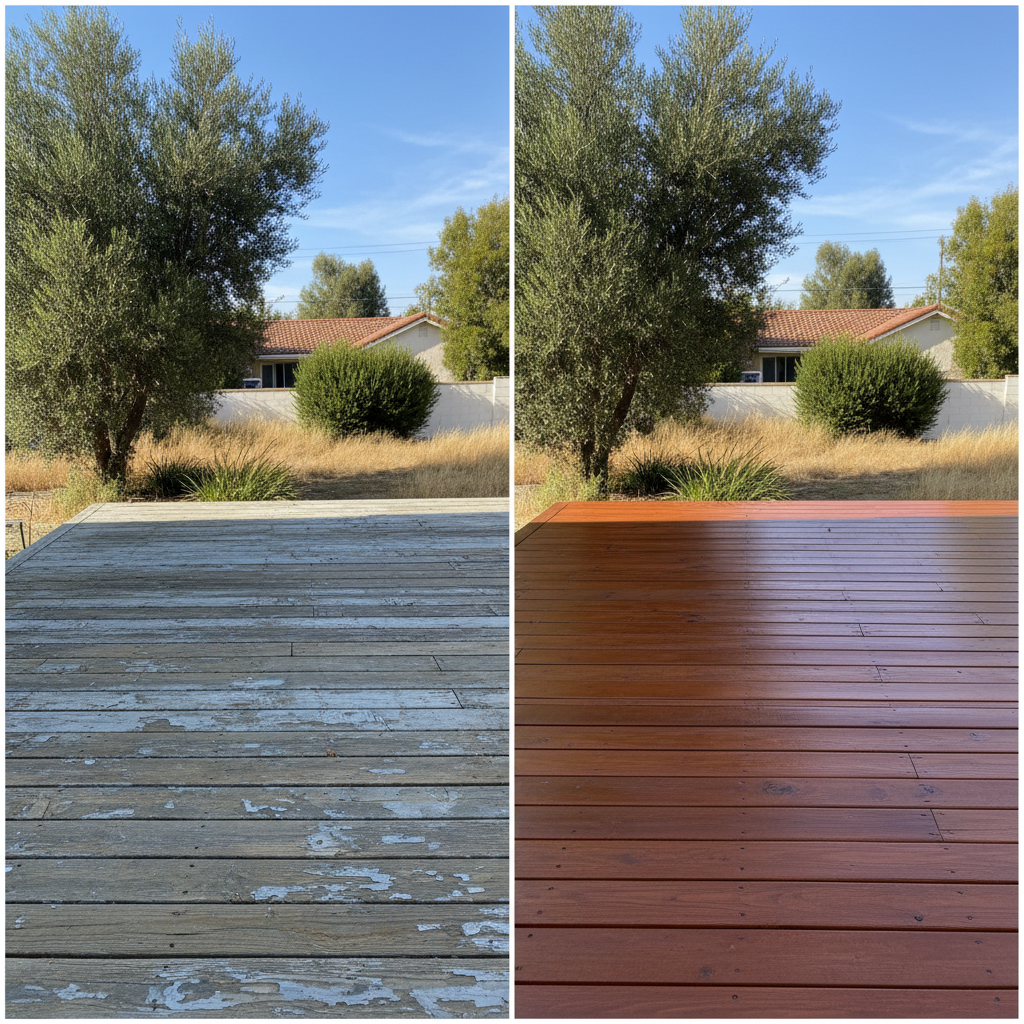
Alright, let's talk decks. Specifically, what you're going to put on 'em to keep them looking good and lasting a long time. I get this question all the time: 'Should I paint my deck or stain it?' It's not a simple 'either/or' answer, especially with our crazy Pomona weather, from those scorching summer days to the occasional heavy winter rain. So, what's the deal?
Deck Paint: The Good, The Bad, and The Ugly
When you paint a deck, you're basically putting a solid, opaque layer right on top of the wood. Think of it like painting a wall, really. It covers the wood grain completely, giving you one uniform color. Lots of folks like this look, especially if they want their deck to match their house trim or just prefer a really clean, consistent aesthetic.
The Upsides of Deck Paint:
- Appearance: You get a huge range of colors. If you're dreaming of a bright white deck or something super bold, paint's definitely your ticket. It can truly transform an older deck, making it feel brand new.
- Coverage: Paint is fantastic at hiding imperfections. Got some old stains, discoloration, or just wood that's seen better days? A couple of coats of quality deck paint can make all that disappear.
- Protection (at first): A good, thick coat of paint offers a strong barrier against UV rays and moisture. It seals the wood up tight, which sounds great on paper.
Now, for the Downsides of Deck Paint:
- Maintenance is a Pain: This is where paint really falls short, especially in our climate. Paint just sits on top of the wood. When the wood expands and contracts with temperature changes—and believe me, it does a lot of that here, from 100-degree days to chilly nights—that paint layer gets stressed. It's not flexible like the wood underneath, you see.
- Peeling and Chipping: Because of that expansion and contraction, paint loves to peel, chip, and crack. Once it starts, it looks terrible, and you're in for a much bigger job than just cleaning and recoating. You'll be scraping, sanding, and then repainting, which is a massive undertaking.
- Hides the Wood: If you've got beautiful wood grain, paint completely covers it up. You lose that natural wood character, which is a shame sometimes.
- Slippery When Wet: Some paints can be quite slick when wet, which isn't exactly ideal for a deck.
Deck Stain: The Natural Look with Real Protection
Stain, on the other hand, is designed to penetrate the wood fibers, not just sit on top. It enhances the natural beauty of the wood, letting the grain show through, while still offering protection. You've got different types of stains, too: clear, semi-transparent, semi-solid, and solid. Plenty of choices there.
The Upsides of Deck Stain:
- Natural Beauty: This is the big one for most people. Stain lets the natural character and grain of your wood shine through. Even solid stains, while opaque, tend to have a more natural, less 'plastic-y' look than paint.
- Easier Maintenance: Stains wear down over time; they don't typically peel or chip like paint. When it's time to reapply, you usually just clean the deck thoroughly and put down another coat. No scraping required! This is a huge time and back saver, trust me.
- Better Adhesion: Because stain penetrates the wood, it moves with the wood. This means less cracking and peeling, even with our fluctuating temperatures.
- Protection: Good quality stains offer excellent protection against UV damage and moisture, preventing rot and graying.
- Less Slippery: Generally, stained decks provide better traction than painted ones.
The Downsides of Deck Stain:
- Fewer Color Options: While there are plenty of stain colors, you won't get the vibrant, opaque color range of paint. Stains are designed to enhance, not cover.
- Doesn't Hide Imperfections: If your deck has a lot of blemishes, a semi-transparent or even semi-solid stain might not hide them completely. You'd need a solid stain for that, and even then, it's not as uniform as paint.
- Needs Regular Reapplication: While easier, staining usually needs to be done more frequently than painting. Depending on the product and how much sun your deck gets—like those west-facing decks in Phillips Ranch that bake all afternoon—you might be looking at every 2-3 years for a semi-transparent, and maybe 3-5 for a solid.
My Recommendation for Pomona Homeowners
Look, I've been doing this for a long time here in Pomona, and I've seen it all. I've seen beautiful painted decks turn into peeling nightmares after just a couple of seasons because of our intense sun and the way wood reacts to it. I've also seen stained decks that look fantastic year after year with just a little TLC. It really makes a difference.
For most homeowners in Pomona, I'm going to tell you to go with a high-quality deck stain. Specifically, a good semi-transparent or semi-solid oil-based stain. Why oil? It penetrates deeper, offers better protection, and tends to hold up better against our specific climate challenges. It's more forgiving and much, much easier to maintain in the long run.
You want your deck to be an enjoyable space, not a constant chore. With a quality stain, you'll spend less time scraping and more time enjoying your outdoor living space. If you're looking for someone who knows the ins and outs of deck care specific to our area, give Pomona Deck & Porch a call. We're happy to talk through your options and get your deck looking its best.